

I would be surprised if most of the tropes and techniques of the modern psychological horror film couldn’t be traced back to The Innocents.
Based on The Turn of the Screw by Henry James, it follows young Victorian governess Miss Giddens (Deborah Kerr) who is put in charge of two young children at a large country estate with only the housekeeper for adult company. After witnessing several apparitions, Miss Giddens becomes convinced that the odd-behaving children are possessed by the spirits of the mansion’s previous inhabitants.
The film is shot in black and white using the wide cinemascope format which allows cinematographer Freddie Francis to add expression with hard lighting and deep focus. Together with the sound design, these are the foundations for the chilling set pieces of the film.
One such scene is the apparition of the ghost of Peter Quint, former valet of the children’s uncle, during a game of hide-and-seek. Miss Giddens, in the foreground, is looking for a hiding place when the figure appears suddenly at the window behind her.

What makes it so striking is how clear and in focus Quint is; both foreground and background are equally sharp. Also, due to the hard light coming in from the left near the window, he seems to creep in out of nowhere. Despite how rudimentary this technique seems today, the effect is still pretty unsettling. I can only imagine that this kind of thing froze the blood of audiences in the ’60s.
Soon after, we get this close-up.

The light from the left I mentioned now casts hard shadows across the face – standard horror effect stuff. It works even better on an actor whose features are the most sharp and angular of anyone else in the film. Also of note are those sparkling points in the eyes. They remind me of a close-up in the first Lord of the Rings film on Galadriel’s starry eyes, an effect created by suspending multiple Christmas lights opposite the subject’s face. I guess The Innocents achieved this in a similar fashion, maybe with fewer (and brighter, and larger) bulbs. Anyway, because the light for the face is side-on and close to the window, when the figure shrinks back into the shadows, those eye-glints are the last things to go – brilliantly haunting. As is the sound at this point which contains Quint’s slow, calm breathing and Miss Giddens’ sharp, broken gasps.
As spooky as these apparitions are, the film (like the original novella) questions the reliability of Miss Giddens’ perception. Are the children really possessed and is the mansion actually haunted? Or is all this supernatural phenomenon an imagination of the governess? Has she a repressed sexuality that gives rise to delusional visions and wild assumptions? Ultimately, we never find out but the excellent screenplay drops tiny hints in both directions.
Supporting the Freudian interpretation are discreet words slipped in to Miss Giddens’ dialogue now and then which seem to reveal an obsession with corruption and depravity. Like describing Quints ghost as ‘Handsome and obscene’ or the children’s behaviour as ‘whispery and indecent’. Her fascination with secrets extends to questioning the housekeeper about the dead lovers and their indiscreet behaviour and profane language. It’s very subtle and it is clear that Miss Giddens thinks she has the children’s best interests at heart but she over protests on this point and others. When explaining how she intends to visit their uncle and confront him, she thinks aloud: ‘he’ll think I’m insane or that it’s some stupid trick to get him to notice me’. Why is there any reason for her to suspect that? Unless it touches on unconscious feelings, unconscious reasons behind the hallucinations.

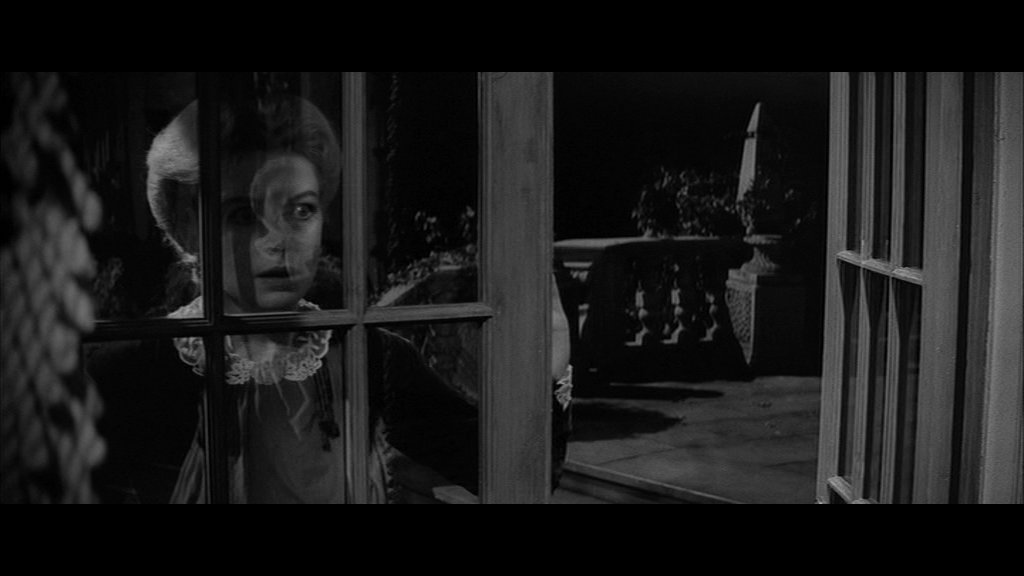
The editing does a good job with visual trickery, playing with the idea of seeing things that aren’t there. The portrait of Quint is laid over a shot of Miss Giddens having troubled sleep, suggesting maybe her daytime visions are just extensions of nightmares. There’s also a great shot just after the first ghost’s appearance when the housekeeper approaches the window to ask what the matter is; she enters the scene as a reflection, laid over Miss Giddens. This reminds us that the real world contains optical illusions and encourages us to question the reliability of our main character’s point of view.
Not that the governess is always under our investigation. The child actors do such a good job being creepy that for a large part (especially on the first viewing) of the film, I was sold on the idea of their possession. The girl, Flora, seems to have repressed memories revolving around the dead couple and a morose lullaby.
 The boy, Miles, talks with a kind of smug experience and takes glee in insouciantly manipulating Miss Giddens’ concern for him. The sense that he may house the spirit of an older man comes to a head in a scene where he kisses her goodnight full on the mouth, stunning her into holding the position for a few seconds before drawing away.
Like all the great psychological horrors it helped lay the foundations for, The Innocents explores the twisted nature of human perception and the mind-horror that can ensue. That it achieves its atmosphere through lighting, dialogue and sound editing makes it as impressionistic as the literature it was inspired by.
 Jon Bates Writes