
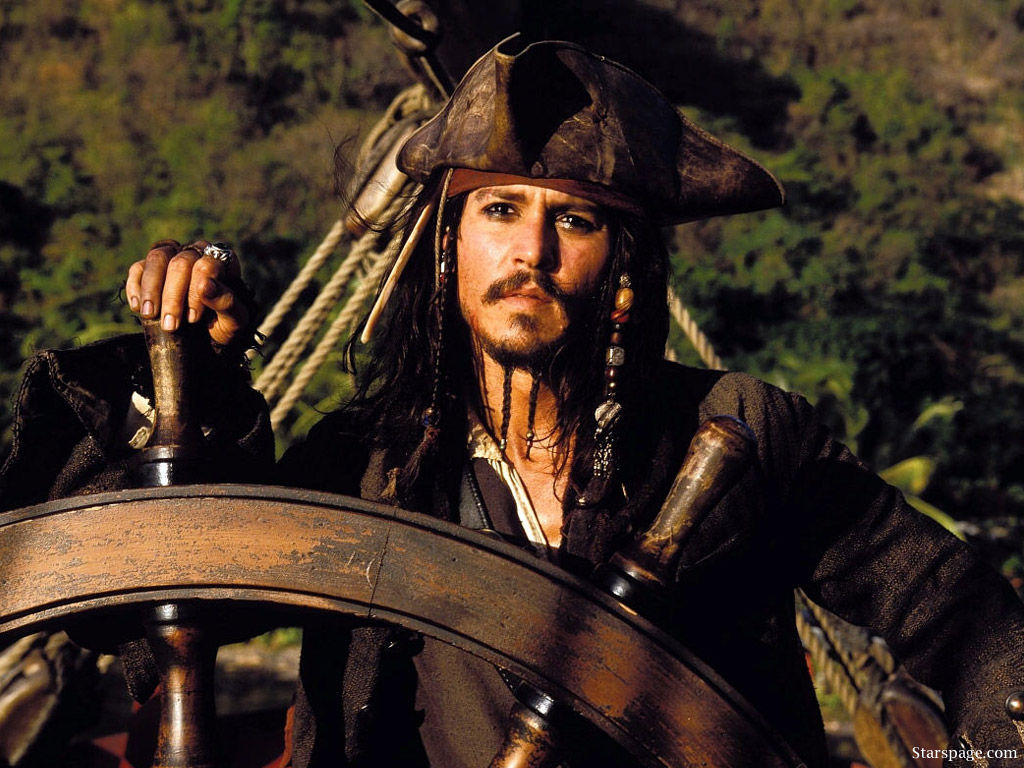
The final seconds of The Curse of the Black Pearl (aka The only POTC film that matters) see Jack Sparrow hungrily heading into the horizon having regained the Captaincy of the ship he loves – the ship that embodies the liberty that defines his character. His cooing soliloquy addressing the sunset and the sting of the title music as it cuts to black is the perfect end to the film. It leaves a whole world to the imagination. Endless speculation. Romantic.
That is until the film does unexpectedly well at the box office and a trilogy is devised to capitalise on what made it a hit.
And so the problems begin, for what bestowed such a peculiar attraction on a straightforward Disney adventure film was an unexpected thing and it being unexpected was the most attractive thing of all. This point is important.
The ‘thing’ is of course Johnny Depp’s alcoholic, amoral, intellectual Captain Jack Sparrow – a creation which (if the stories are to be believed) was as much down to the actor himself as to his direction (or lack of). The confusion and concern with which executives reacted to Depp’s slurring and swaggering is well documented, as is his influence on Sparrow’s final costume and make-up.
The original film, The Curse of the Black Pearl, is a story of romance and class, a bit like your Jane Austen, only with skeletal sword-wielding opportunists. Elizabeth Swan is a privileged something; Will Turner is an orphan labourer. Can they traverse social barriers, flout Elizabeth’s arranged marriage and end up in love, even engaged, with the unlikely approval of Elizabeth’s father? Well, yes. But it’ll take an entire film to get there, helped along by the trauma of Elizabeth’s kidnap and Will’s relentless quest to rescue her from a crew of cursed pirates.
The characters of a classic narrative are in place – hero, princess, villains – and plot events can now follow their natural course. Then again, Will might need a little help along the way. He knows nothing about piracy after all and his infatuation with Miss Swan might hamper the practical side of his rescue attempt. What this story needs is a hero’s helper, or as theorists would term it, a ‘donor’. It would help if he had some connection with the bad guys; he has to lead Will to them after all… But he shouldn’t be on their side… How about a lone pirate who has fallen out of favour with the rest of the crew? Yes. Let’s call him Captain Jack Sparrow.
He is an afterthought, existing only as a facilitator in the overall quest. As director Gore Verbinski admits “The first film was a movie, and then Jack was put into it almost”. Slotted in, useful but not necessary, he has no right to steal the show.
Then he does. Because his camp gesticulation, linguistic dexterity and fluid morality are so at odds with any other character. Frankly, he doesn’t belong in a Disney film. 9 years later, there have been 3 more POTC films and another is on the way. Because of Sparrow’s profitability, Disney decided he did belong after all. And the more he belonged, the duller it became.

I’m not suggesting the film’s makers were ignorant. Verbinski is not an idiot. He does understand that what made the character work was his contrast to those who surrounded him:
They’re the straight men. They’re the kind of narrative, they’re burdened with more than Jack is. Jack gets to be more absurd and the other characters have to provide the kind of basis for the situation. (Full interview here)
They knew Jack would draw audiences back, but he needed foil to react against. The problem is, as soon as the writers clocked on to this, it became a formula. Whereas POTC 1 took itself seriously and was undermined unintentionally by a minor character, POTC 2, 3 and 4 are designed to make him the star of the show. And the whole thing isn’t fun anymore. It’s like that ‘Bedhead’ hair product. If someone wakes up and leaves the house, turning heads in the street because their hair has happened to fall into some edgy style accidentally, there’s something exciting about the coincidence. If they miss breakfast, painstakingly trying to reproduce the look in the mirror for 2 hours with a specialist serum then take the bus for fear of the wind blowing it out of place, everyone knows it. Everyone knows it and nobody is impressed.
In the spotlight, most of Sparrow’s charm begins to melt away. Some character traits are exaggerated past the point of farce, others are completely thrown out. He gets given a set of purposes (yuck), including:
1) Sate an angry Davey Jones with the souls of a hundred men
2) Vie against the East India Trading Company for a compass, Jones’ beating heart, the right to rule the waves etc.
3) Escape Davy Jones’ locker
4) Find the fountain of youth
Which burden him with concerns that contradict his carefree wanderlust. Then there’s the vocabulary. From his position as a neutral free agent, Sparrow always had a good ear for logical fallacies and contradictions. His smart exchanges exposed the hypocrisies and ignorance of those he sparred with. In later films this becomes a series of convoluted tongue twisters, self-contained and irrelevant. Brevity is the soul of wit; the indulgent ramblings of the fourth film (especially) are not.
Who to blame for ruining a good film and a magnificent character? As usual, it’s nobody that we know the name of. For it’s impossible to condemn anyone involved in its actual production. Verbinski is competent, the writing is solid, and Depp is just happy marauding in gold teeth and a dreadlocked wig. What killed the Pirates of the Caribbean was the studio’s decision to accommodate the rebel, to push him centre stage and squeeze as much money as possible out of a freak accident. Now the franchise is a monster and we’ll be lucky if it ever stops.
 Jon Bates Writes