Les Misérables (2013)

les-miserables-coverReleased mid-January and with a trailer that revels in the glory of its stars’ past Academy Award decorations, Les Misérables was being sold as typical Oscar fodder even before the inevitable nominations came last week. Of the flood of contenders cropping up this month, only Lincoln plays this card stronger. Despite its accolade-angling shine and the overall safety of its casting and direction, the film, as it happens, is a good one.

It begins with an ostentatious shot that takes us from an underwater French flag up through the bough of a ship and swoops right down to find Jean Valjean (Hugh Jackman) rope-hauling the massive vessel with hundreds of fellow slaves. Something seems amiss. The screen seems unusually narrow for such an epic shot; the 1.85:1 ratio is industry standard but barely does it justice. Surely, the panoramic 2.35:1 is much better suited to the job? It is definitely the most popular for productions of this size – of the current box office top 10, only Pitch Perfect and Parental Guidance (neither big awards contenders) are filmed in 1.85:1.

Les Mis Jackman and HathawayBut as the film settles, it becomes clear why director Tom Hooper eschewed the wider format. Les Misérables is a character piece and stays tight on its subjects. But for the odd exception (a shot which tracks back from a cliff before diving down into a street, and one that leaps over a cross-topped steeple to settle on a people-packed funeral), its characters’ faces are scrutinised for almost 3 hours in shallow focus close-ups.

Under this intense inspection, the cast excels – Jackman and Anne Hathaway especially taking advantage of the opportunity to squeeze the emotional intensity out of every moment. The only exception is Amanda Seyfried whose reedy voice and bewildered expression undo the intrigue set up by her character Cosette’s child self (played for 10 minutes by Isabelle Allen). To be fair, Seyfried isn’t given much to work with; adult Cosette rather wilts in the corner while loveblind revolutionary Marius (Eddie Redmayne) courts her from the barricades. Having said that, I do love this shot of her wilting in the corner.

cosette off centre

Helena Bonham Carter and Sacha Baron Cohen carry their roles as perfectly pitched grimy opportunists in Sweeney Todd (2008) through to this and it works just fine. Their Thénardiers lighten up the general miséry the plot, appearing first just after tragic event number one and being peppered through thereafter to divide the glum into palatable chunks.

The film is a little long. I presume the stage musical has an interval which allows the audience some rest and respite. Were the conventions of cinema similar, a ten minute breather might solve the issue.

I’m thinking about how else to discuss the film but I think a director generally can’t go wrong with such strong source material. The music really holds it together and carries it home safely and it is Hooper’s job to simply capture this without getting in the way. All he needs to do is add some stylistic touches here and there while sticking to his framing decisions to help its cohesive transition from stage to screen. And that’s exactly what he does.

While I’m sure the DVD sales of the film won’t disappoint those who profit from them, I think Les Misérables healthiest life will be as 5-minute song-size clips on the internet, where people will seek out small strong shots of the misérable without having to rerun the whole marathon.
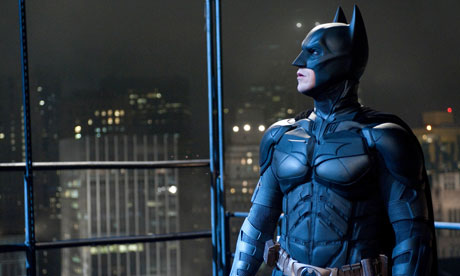
The Dark Knight Rises (2012)

In rounding off his trilogy of Batman films, Christopher Nolan meets all expectations, delivering a typically fast-paced narrative and strong pervading atmosphere with predictable sureness and skill. Contrary to the ravings of some critics, The Dark Knight Rises doesn’t take the franchise up another level nor does it push any envelopes or deliver anything you haven’t seen before. It is simply a stylish doom-laden conclusion to the Dark Knight story that, in keeping with the other films, is very well made.

As a whole, the great accomplishment of the trilogy is its commitment to a mature retelling of a comic book story without infantilising complex issues or pandering to an imagined demographic. Pick a selection of the top 20 most expensive films of the last few years and almost all will follow safe formulae, well-established guidelines designed to recoup their cost and make a little money by stretching their appeal so broad as to be anodyne. Storylines will be childish in their simplicity, gloomy moments will have their edge taken off with misjudged light relief and challenging ideas will be conspicuously absent.

Nolan has proved that filmmakers do not have to patronise their audience to make a great deal of money at the box office. He has a few interesting notions about the contemporary world and the fractured identities of both individuals and large urban collectives. He has a vision as to how stories regarding these ideas can be told and, most importantly of all, he doesn’t think we’re too dumb to understand them.

The Dark Knight Rises begins eight years on from the events of the previous film. Bruce Wayne has grown ever more reclusive in the intervening years since he decided to hang up his cape in the wake of Gotham’s scorn for his alter ego. The city itself is doing well, with organised crime all but eradicated under the new laws left behind by Harvey Dent. Bruce is stirred from apathy by Selina Kyle (Anne Hathaway), a cat burglar who he catches stealing his mother’s pearls. She warns him of a coming storm, a consequence of the gap between the city’s rich and poor. Sure enough, the stock exchange is soon raided by new villain Bane (Tom Hardy): a member of the League of Shadows who has come to fulfil Ra’s al Ghul’s mission to destroy Gotham, thus restoring ecological balance to the world. If this sounds like too much back-story, it probably makes sense to watch the earlier films. There is plenty to enjoy without having done so but it obviously helps fill in the blurs.

Hathaway brings a welcome individualist to the part in her role as the Cat Woman character (she is never actually referred to as such but the costume gives it away). All we ever hear about in the previous films is Organised Crime, gangs and bosses and citywide corruption. It’s nice to finally see a criminal out on their own for what they can get. Fun crime, cheeky crime. It adds a nice antihero vibe missing from the other films.

Bane is a different nemesis than Batman is perhaps used to. With power based on physical presence and force as well as brains, he cuts a much heftier figure than either the Scarecrow or the Joker and his hand-to-hand combat provides a genuine threat to the caped crusader for the first time. It’s great and it works –with one big problem: the voice. Hardy developed a distinct Caribbean-flavoured intellectual accent for the role and it is effectively deep and threatening and quite otherworldly when it is audible – unfortunately that is only half the time. Whatever muffling and filters with which the sound department affected the voice, they obscure Bane’s words a little too much. It is a smart idea to make him sound separate and half-machine-like compared to the other characters but it’s just overcooked in post-production.

I don’t care much about big action, although I can accept that The Dark Knight series’ set pieces are as impressive and arresting as any blockbuster’s can be. What really holds me in place is the noir of Gotham City and the bleak, seemingly irresolvable corruption. Above all else, I love the nihilism at work, how there is no sign of divine luck, no easy swing from bad to good, not even a clear definition of the two poles. Instead, crime is rife because it pays. The city is a mess and it isn’t going to be fixed by one man’s crusade against evil. I love the mentality of the villains and the way their philosophies almost sound convincing in an ugly Nietzschean way.

One thing that seemed out of step with Nolan’s usual exploitation of the ambiguity of moral dilemmas is what seems a blatant conservative agenda in regards to the class war that erupts in Gotham. Led by Bane, the underclass of the city strips the wealthy of their assets and puts them on trial in a mock court. While this draws strongly from the French Revolution, the involvement of the stock exchange echoes the anti-capitalist protests of the last year. With Bruce Wayne among the wealthiest of the city tasked with fixing this unrest, the message seems to be that anybody protesting against economic inequality is a pesky little terrorist that needs neutralising. Bane is clearly using the unrest of the masses to his advantage, helping him carry out unmitigated destruction, but just why the citizens are so easily turned into brawling loons is a question largely shrugged off. Maybe if it were addressed, Gotham’s problems would be solved and sequels suddenly redundant – and maybe that explains it…

Overall, The Dark Knight Rises is a great spectacle and should be taken as the concluding chapter of a fantastic trilogy that has probably significantly redefined how comic books are adapted from now on. Here’s hoping that Chris Nolan now turns his attention to something perhaps a little cheaper and tighter, something on a par with his real masterpieces Memento and The Prestige.