10. Looper
Announced by bus posters everywhere as ‘this generation’s The Matrix’, Rian Johnson’s time-travelling dystopian thriller shoehorns itself unfortunately into the slew of similarly-themed movies that tried to cash in on the back of Christopher Nolan’s excellent Inception (2010). I’m thinking of The Adjustment Bureau and In Time (both 2011).
But Looper is better than that. It comes from the writer/director of Brick (2006), a fantastic neo-noir with excitingly brisk dialogue and employing inventive filming solutions to the problem of having no funding.

Happily, Johnson’s writing survives the big budget switch and the roving long takes, which directors so often lose once they hit the big time in favour of rapid cuts between too many shots, are still intact. The main problem is that the cineaste in Johnson gets the better of him and, as the film progresses he starts paying homage to too many genres to keep its cohesion.
But it’s fun and engaging with a ridiculous plot involving a man’s struggle to assassinate his escaped future self in order to fulfil a contract that should see him rich for the rest of his life. And the future self’s struggle to do some killing of his own in order to re-order time and undo the murder of his past self’s future wife at the hands of someone called the rainmaker.
Then there’s a telekinetic child too.
9. Skyfall
The 007 trope ticklist was established long ago and has been handed down from generation to generation for 50 years like the 10 commandments of British spy thrillers.
Pre-credits action blitz
Conspicuous product placement
Q-designed gadgetry
Tuxedo scene
Vodka Martini
His name is Bond… James Bond
Disposable love interest(s)
Iconic theme tune/motifs
Cool cars
Verbose Villain
Considering that all a James Bond film has to do is obey these rather straightforward guidelines, you might expect that the room to make mistakes is helpfully restrictive.
However, as recent Bond directors have proven, there is still plenty of opportunity to churn out a poor film regardless. But American Beauty director Sam Mendes makes no such errors, hauling the franchise back on track with a simple story told well and shot beautifully by Roger Deakin.
Javier Bardem is the best Bond villain for a long time with a pantomime version of the controlled creepiness that he last exhibited as in No Country For Old Men (2007) and Judi Dench is finally given license to explore the past trauma and dark truths behind M’s cold matriarchal facade.
8. Argo
 Ben Affleck directs and stars in the improbable true story of a group of American diplomats who, housebound and in hiding during a violent revolution, are convinced by the CIA to pretend to be the production crew of a science fiction film in order to smuggle themselves out of Iran.
The film in question was put into full-scale production in order to fool the Iranian authorities. A script was chosen, financial backers were found, special effects advisors were drafted in, and companies created. Full-page advertisements were even published on the off chance that doubting passport control officers might read American film magazines.
Affleck manages the balancing act between documentary and drama, even masterfully throwing in several comedic moments which never threaten to undermine the genuine jeopardy of the six diplomats trapped in Iran.
Pacing is what made Argo such a great watch. Its pacing made it gripping in an old-fashioned way; that’s why it makes this list.
7. Frankenweenie
It seemed 2012 was the year that studios finally figured out how to exploit Tim Burton’s playful sense of the macabre for the mass children’s market. Henry Selick, the man who brought Burton’s Nightmare Before Christmas to life in 1992 had tried without success to replicate its creepy charm with Coraline (2009), a film that screamed “isn’t this a quirky, creepy, charming experience?” – but wasn’t – “Bit like Tim Burton don’t ya think?” but wasn’t.
This year Selick’s Paranorman was considerably more impressive, once again mining the child/fear dichotomy for material but bypassing the unimpressive spookfest and finding something of real substance at the heart of a high quality children’s horror story.
With the more vacuous (but still fun) Hotel Transylvania rounding of the animated Halloween fare, October was the perfect time for Tim Burton’s return to the medium on which he has had such a marked influence over 20 years – stop motion animation.
Frankenweenie is the story of a young boy who is successful in his experiments to reanimate the deceased family dog. Its classic Burtonesque themes of imagination vs. inertia, suburban fear vs. adventure and life vs. death have never been presented so well by the man behind the camera. Just when the rest of the world seems to have clocked on to the formula, Burton reminds us why he is the master of the form, demonstrating the inimitable flair that mark him as an auteur among other animators.
6. Martha Marcy May Marlene

This gem is probably the most independent-spirited film on this list and by far one of the cheapest to make. It’s a straight up psychological drama starring Elizabeth Olsen as a vulnerable young woman who regains contact with her sister after 2 years in an isolated commune.
The film reflects the paranoia of its subject, reporting the woman’s ordeal through half-remembered flashbacks triggered in the aftermath of her “escape.”
The transition from past to present is so smooth that as sequences start, it is often unclear to which they belong. It scrambles the audience mind to match Martha’s confusion and leads you into her trauma.
5. The Hunger Games
 Arguably the most accomplished dystopia since Brazil (1985), The Hunger Games was billed by industry bigwigs as the new Twilight but its own credentials far outweigh this shallow comparison.
Jennifer Lawrence stars as one of twenty-four teenage tributes, forced to compete in a battle to the death for the amusement of a future society’s elite class. This biting satire on reality television and the saccharine tastes of a bored world desensitised to violence is mitigated only by the self-censorship of its makers, who cut several violent moments in order to achieve a 12A rating rather than the original 15.
This action is for me not fully justified and results in a film that is not quite as shocking as it should be. Children killing children should anger and disgust, no?
Nevertheless, the story, design and performances of the film make it one of the best of the year regardless. Jennifer Lawrence is fantastic and as Silver Linings Playbook further testified late in the year, she is currently one of the best screen actors of her generation.
4. The Hobbit: An Unexpected Journey
…is definitely too long and full of unnecessary blind alleys. But as soon as the Middle Earth typeface faded in the title of the film and the familiar Shire theme eased in on soft woodwinds, I was accosted by a massive grin which only waned in relation to the blood flow in my legs as the running time crept towards 3 hours.
It has always been difficult to gauge your position in Peter Jackson’s sagas as Middle Earth happens around you, so in a way his Tolkien films can never be considered perfect works in and of themselves, but being lost in a fantastical wonderland is exactly their appeal.
Like Prometheus (a perfectly enjoyable movie that didn’t make this top 10), The Hobbit is the result of consummate filmmaking. There is little that is post-modern or particularly arty about the direction or cinematography but the film is so well made that even those who feel only mildly persuaded by the idea of a Tolkien epic will marvel at Jackson’s accomplishment.
3. Beasts of the Southern Wild
 It may just be that I’ve yet to see Pans Labyrinth but Beasts of the Southern Wild exhibits probably the best magical realism I have ever seen on film.
Set in the deep south of America, the film chronicles the struggles of a small community living in ‘the bathtub’ (a swampy region cut off from the mainland by a levee) following the advent of a huge storm.
It seamlessly melds the Cinéma vérité style of gritty documentaries with the computer-generated wild imaginings of the young girl at its centre. The first half hour plays as a slow and very intimate exposition of an undiscovered tribe of self-dependent people who are inextricably rooted to their muddy habitat. As the earth itself literally moves around them and water threatens to eviscerate their livelihoods, the young Hushpuppy shakes wild creatures from her mind as she is forced to deal with the bathtub’s biblical plight and an ailing father who refuses to give in to mortality.
2. The Avengers
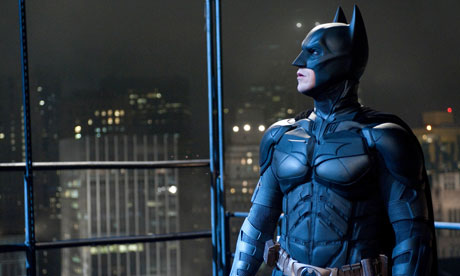
In another big year for comic book adaptations, Joss Whedon’s carefully crafted ensemble piece served up the kind of wit and excitement with which the Spider and Bat men of the Summer simply couldn’t compete.
Whedon recognises the absurdity of several super heroes meeting up to save the world and the humour to be exploited from their small-scale exchanges.
The film is best when dealing with this clash of egos and delving into the small insecurities and mundane chat between the characters – something which most writers would gloss over in favour of grand posturing and gratuitous action.
Which isn’t to say that the action sequences in The Avengers aren’t satisfying; satisfying is exactly what they are. With fights well choreographed and camera movement sensitively paced, the film never bores with tiring fast cuts and delivers instead an in-depth character-driven story of the ilk that has worked so well for Whedon’s television projects for so many years.
1. The Master

The sentence that just occurred to me is “Paul Thomas Anderson left plot to rot on the wayside long ago” but, in truth, PTA’s fierce character-heavy visions never had much room for traditional narrative.
With a philosophy best summarised as “wind the characters up and objectively watch them interact until 143 minutes have passed”, The Master sees a damaged war veteran Freddie Quell (Joaquim Phoenix) distracted by a Scientology-like cult ‘the Cause’ whose leader, Lancaster Dodd (Philip Seymour Hofman) has a group of followers lapping up his deluded but arguably well-meant teachings.
While The Master is expertly drawn, it is ultimately directionless. If you want a story, leave this alone. If you’ve endless patience and an interest in how mystical belief systems grow in size and appeal and power, enjoy.

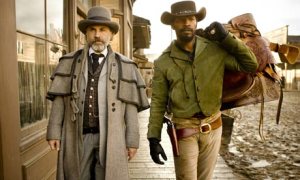 Quentin Tarantino’s return to form is, like all of his best work, a showcase of tributes to his favourite exploitation films all squished together to the point of bloodbath. The outrageous violence of its set pieces is choreographed to perfection and is topped only by the mellifluous ear candy of the movie’s dialogue.
 Also fascinating is Calvin Candie, owner of the infamous Candieland plantation, who Leonardo DiCaprio portrays with a subcutaneous threat to match that of Schultz. The tension in the air as Django and Schultz slowly acquaint themselves with Candie is delightful. Under the guise of Mandingo Trainers (‘mandingos’ are slaves bred to fight each other to the death) they attempt to rescue Django’s wife, Broomhilda (Kerry Washington) from Candieland with a predictably messy climactic outcome.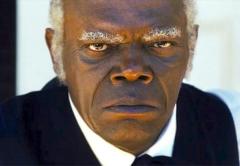
 The one gripe I have with the film is its lack of discipline. Quentin Tarantino is an auteur; of that there is no doubt. Give him a camera and some money and he’ll have a ball. But while that might be unbridled joy for him, his films suffer if nobody reins him in. Take his interviews in which he often makes fantastic points and examines cinematic issues in very interesting detail but which can quickly topple into ridiculous self-important ramblings if the interviewer lacks the bravery and awareness to contain his answers and switch the area of conversation when required.




 Jon Bates Writes